Soil conditions can also vary across a single property. One area may drain better than another, while slopes, compacted ground, seasonal water tables, and nearby drainage patterns can influence how wastewater moves. That's why septic system design and installation require a site-specific assessment rather than a one-size-fits-all approach.
Existing systems may also struggle when household water use increases or when the drain field becomes damaged or clogged. Adding bedrooms, hosting more occupants, or running several water-consuming appliances at once can place additional demand on a system that already has limited absorption capacity.
Warning Signs Charlotte Homeowners Should Watch For
Changes in drainage around your home can reveal problems with the septic system. Keep an eye out for:
- Persistent wet or unusually soft ground above the drain field
- Sewage odors near the septic tank or disposal area
- Toilets, showers, and sinks draining slowly throughout the house
- Wastewater backing up into floor drains or plumbing fixtures
- Unusually lush grass concentrated over part of the drain field
A single slow sink may have a local clog, but problems affecting several fixtures can indicate a blockage or a larger septic issue. If sewage surfaces in the yard or backs up indoors, reduce water use and arrange professional septic service. Avoid contact with wastewater because it may contain harmful microorganisms.
Protect Your Septic System in Clay-Rich Soil
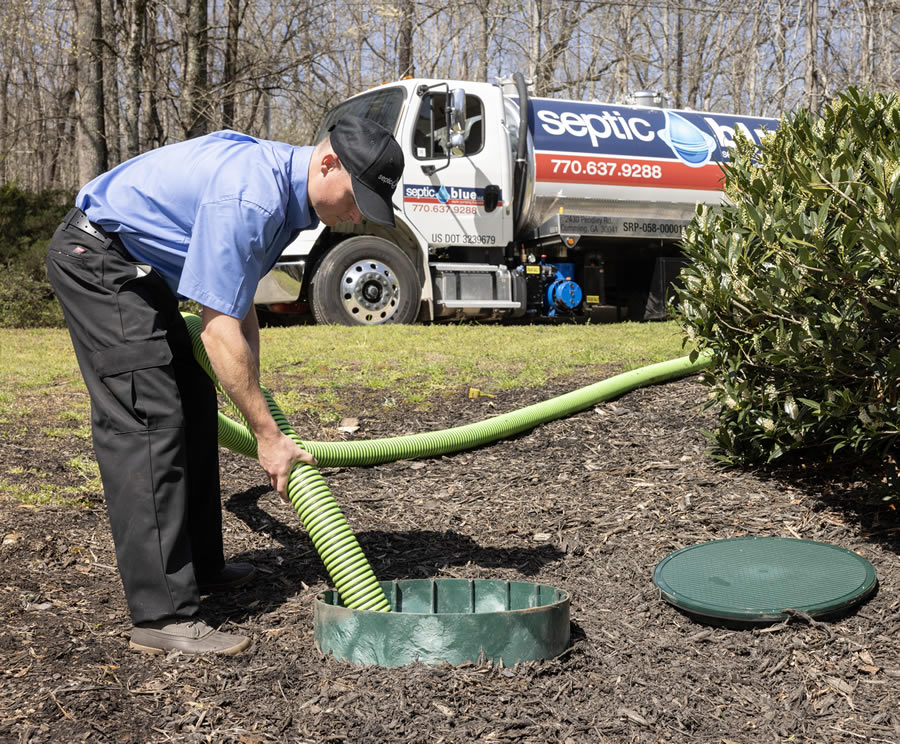
Routine maintenance is particularly important when soil drainage is a concern. Have the septic tank inspected and pumped according to its condition, tank capacity, household size, and water usage. Keep vehicles and heavy equipment off the drain field, and direct roof runoff and surface drainage away from the area. Excess water from downspouts or poor grading can further saturate the soil.
Avoid treating recurring drain field problems as a simple pumping issue. Septic cleaning and pumping remove accumulated solids from the tank, but it does not correct poor soil absorption, damaged distribution pipes, or a failing drain field.
Do You Need Professional Septic Service? Contact Septic Blue of Charlotte Today
The best soil type for septic systems is loam soil due to its balanced composition, optimal drainage, effective filtration, and percolation rate. Carolina’s clay soil is known to drain slowly or trap water, leading to surface pooling, backups, and system failure. Septic Blue of Charlotte is here to help you with all of your septic needs. From regular septic pumping to cleaning out compacted solids and routine inspections, we’ve got you covered. Choose Septic Blue of Charlotte when you need professional septic service!