Call Today to Get 10% OFF Septic Repair
Septic Repair - Up to 36 Months Financing Available
A slow drain and a full tank can look similar at first, but they are not the same problem. The easiest way to tell the difference between a slow drain and a full tank is to check how many fixtures are affected. A single slow drain indicates a localized pipe clog affecting a single fixture, while slow drainage across multiple fixtures or the entire house usually means your septic tank is full or the main line is blocked. It’s a good idea to seek help from a local septic company in Charlotte, NC when you need a thorough inspection.
Both a clogged drain and a full septic tank can cause wastewater to drain slowly, which makes it difficult to identify the source based on one symptom alone. A bathroom sink that drains slowly may simply have hair or soap buildup in its trap or drainpipe. If the kitchen sink is the only fixture affected, a localized blockage is also a likely explanation.
A septic problem tends to affect more than one fixture. You may notice that several drains are sluggish, toilets flush poorly, or wastewater backs up into a tub or shower. However, multiple slow drains can also indicate a blockage in the main sewer or septic line. That is why the number of affected fixtures is a useful clue, but not a definitive diagnosis. It makes sense to call a local septic company to perform an inspection and help you decide.
As solids accumulate inside a septic tank, less space remains for incoming wastewater. Once the tank reaches capacity, wastewater may have difficulty moving through the system, causing slow drains, gurgling toilets, unpleasant odors, or sewage backups. In more serious situations, wastewater can surface around the drain field.
A full tank will not be fixed by repeatedly using a household drain cleaner. The tank needs to be evaluated and pumped when necessary. If septic cleaning does not resolve the problem, a professional septic technician can investigate whether a blockage, damaged pipe, or drain field issue is contributing to the symptoms. Choose the pros at Septic Blue of Charlotte when you need a trusted septic company to inspect your septic system.
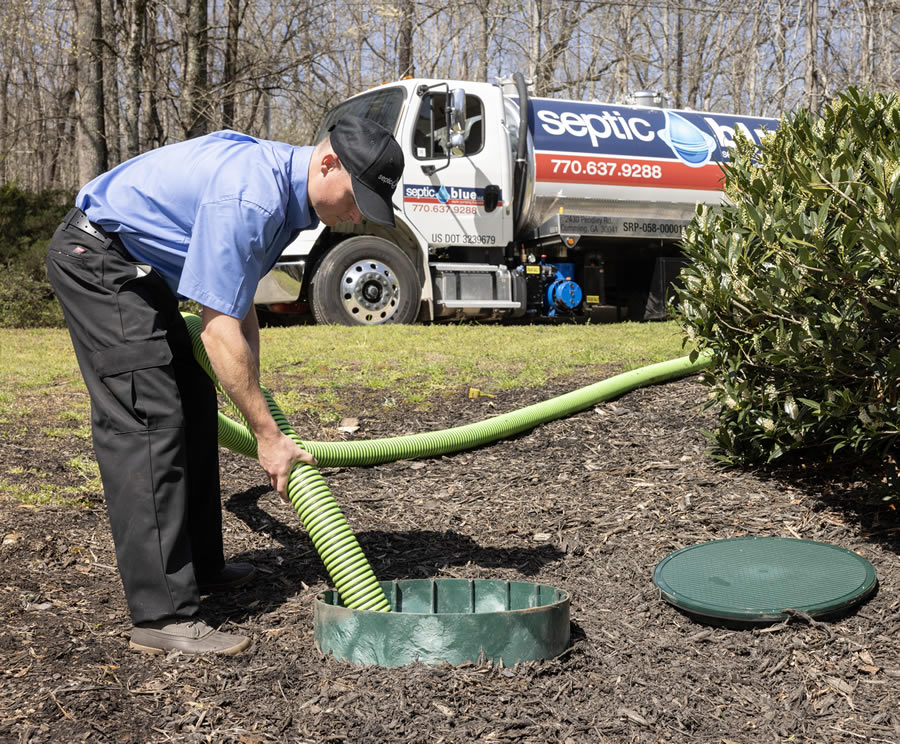
Septic pumping may be appropriate when the tank has reached its service interval or when a high solids level is limiting its available capacity. The correct pumping frequency varies depending on factors such as tank size, household size, water usage, and the amount of solids entering the system.
If several fixtures are draining slowly and your tank has not been pumped recently, septic pumping is worth discussing with a professional. An inspection can help determine whether the tank needs pumping or whether the symptoms are actually coming from a clogged line or another septic system component. Emptying your septic tank before it exceeds capacity can help you avoid emergencies like backups.
Regular septic maintenance can help reduce the chance of confusing a routine drain problem with a larger septic issue. Avoid flushing wipes, paper towels, feminine hygiene products, grease, and other unsuitable materials. In the kitchen, use a strainer to keep food particles from entering the drain, and repair leaking or running fixtures that unnecessarily increase wastewater flow.
Keep track of when your septic tank was last pumped and pay attention to changes in drainage. A slow drain that repeatedly returns, multiple sluggish fixtures, sewage odors, or recurring backups should be checked by a professional septic company.
A full septic tank is an issue that needs to be addressed as quickly as possible to avoid emergencies. This is not the kind of job that you can handle yourself or leave to an amateur. Septic Blue of Charlotte is here to help you pump your full septic tank and address any other problems you may be experiencing. Our professionals are ready to address all of your septic needs without breaking the bank. Contact us today to schedule septic service.