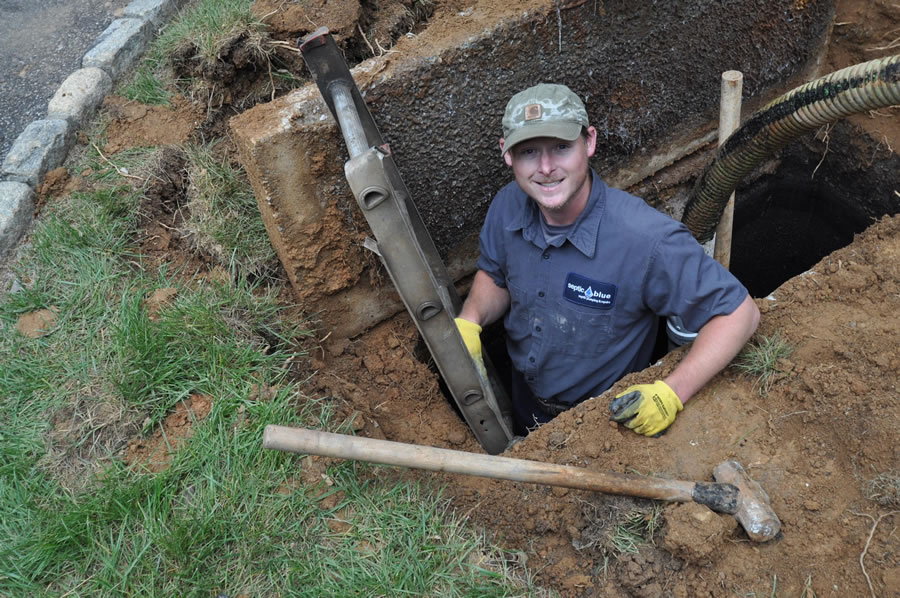
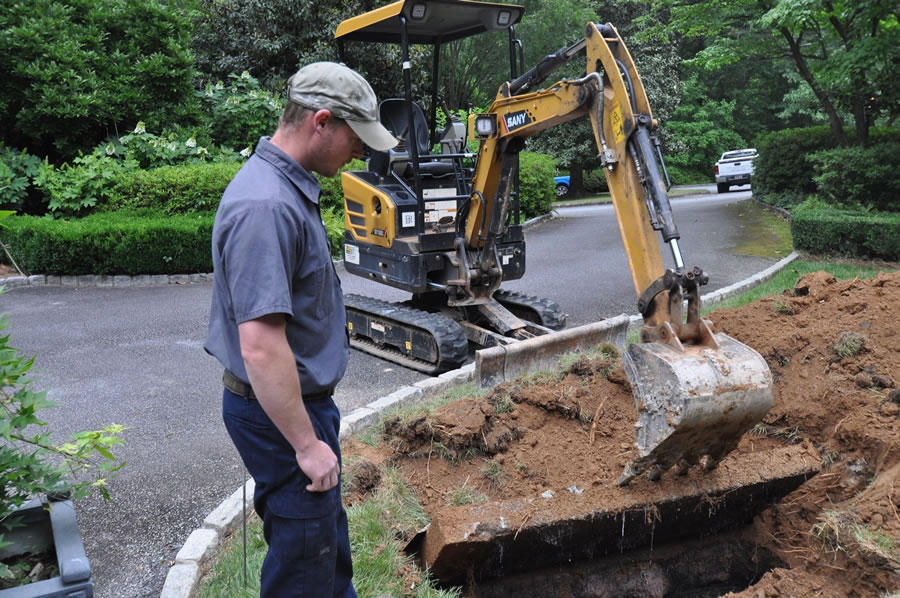
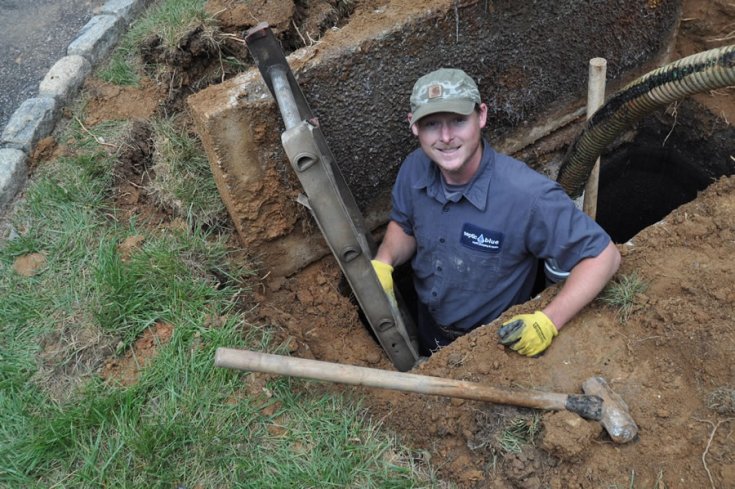
There’s also the possibility of tank damage. Cracks in your septic tank's walls will allow contents to leak into surrounding soil. Tans can develop cracks from ground settling, freeze-thaw cycles, tree root pressure, or simple age-related deterioration.
These structural failures don't repair themselves. They progressively worsen, and time is of the essence. Contact a septic company as soon as possible to avoid further headaches.
Benign Causes That Require Less Urgent Response
The good news is the some causes of that wetness in the yard is more benign, or typically harmless. It could be due to drainage issues, seasonal high water table, or recent maintenance:
- Poor Drainage: Natural depressions in your yard's topography can collect surface water from roof runoff, landscape irrigation, or even neighbors' properties draining toward yours. Installing French drains, regrading the area, or redirecting gutters often resolves these issues.
- High Water Table: In regions with high water tables, groundwater naturally rises closer to the surface during wet seasons. This phenomenon typically affects large areas and fluctuates predictably with seasonal patterns.
- Recent Maintenance: If you've recently scheduled septic service, the wet area might simply be due to disturbance from equipment accessing your tank. These maintenance-related wet spots typically resolve within days.
Determining the Cause
Start with the obvious questions. Does the wet area smell like sewage? Septic-related wetness almost always produces foul odors. Is the grass abnormally green or growing faster in this area? That suggests nutrient-rich wastewater reaching the surface.
When did you last schedule a septic cleaning? If it's been five or more years, an overfull tank becomes the leading suspect. Moreover, check whether the wetness appears only after specific events. If it’s after heavy rain or lawn irrigation, surface water drainage likely explains it.
Preventive Maintenance and Care
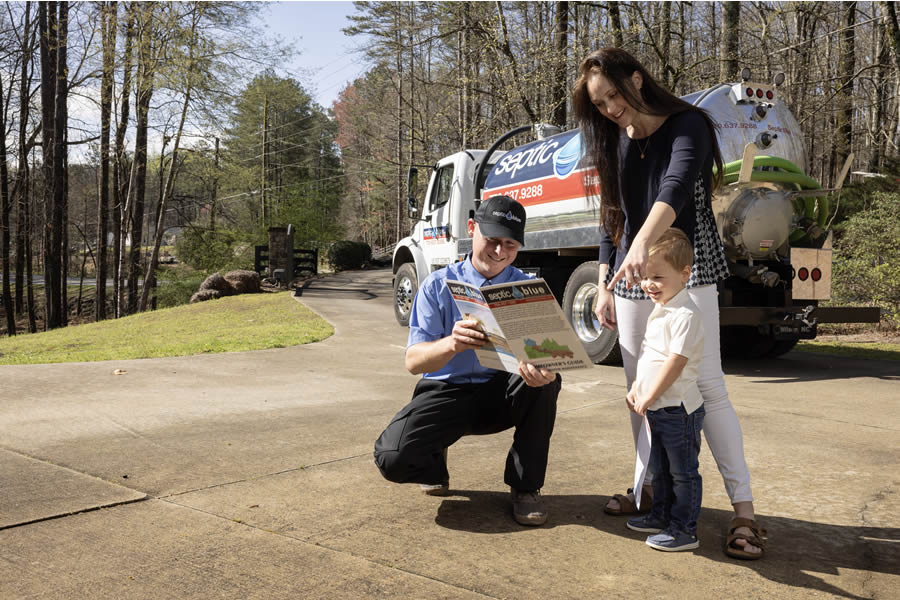
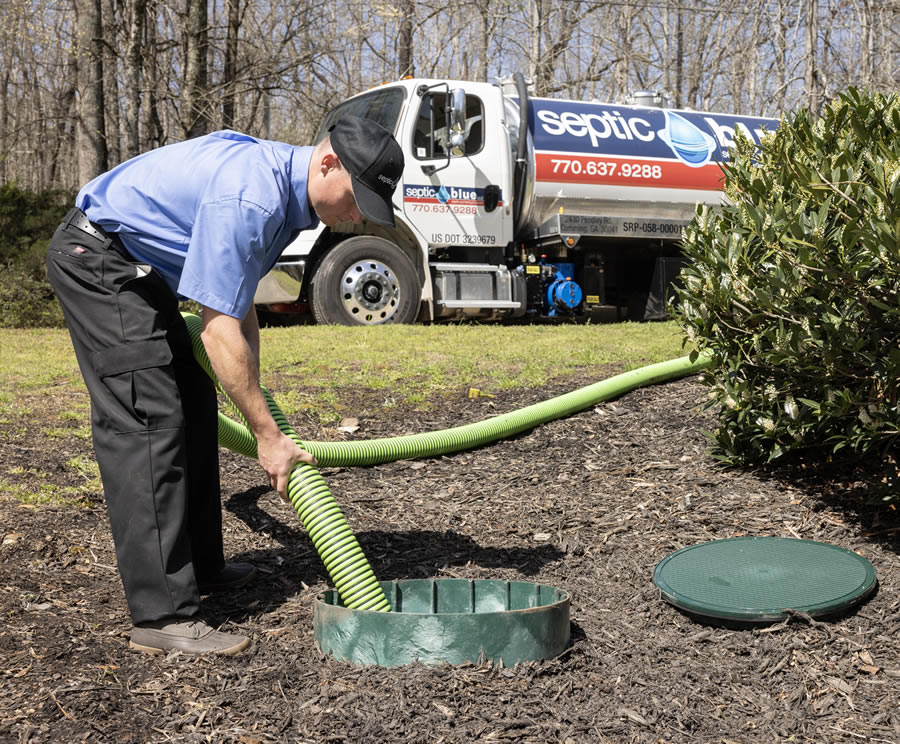
Routine maintenance is essential in order to protect your property against the worst case scenarios. Periodic septic pumping is arguably the most important task. Most residential systems require pumping every three to five years.
Annual inspections are also always advisable as a septic professional can catch issues and vulnerabilities before they become big problems. The team at Septic Blue is here to help if you need professional assistance.
Our office team and dedicated septic pros are ready to schedule an appointment or arrange an urgent dispatch for as soon as possible.